Top 3 Zon Tools Review Software Alternatives 2026
Finding Amazon PPC optimization software that delivers clear recommendations and fits both solo sellers and agencies is more confusing than it should be. Many tools gate critical features behind high minimum spends or conceal pricing and contract terms. This comparison explains pricing, recommendation logic, and support models so sellers and agencies can choose an alternative that matches their campaign needs.
Table of Contents
Selloop.ai
At a Glance
Selloop.ai measures the impact of the campaign changes you apply, with a first verdict from day 8 and a second from day 15. The product connects directly to Amazon Ads API to pull campaign data without manual exports. It charges a fixed fee with no commissions on ad spend.
Core Features
Selloop.ai performs deep campaign analysis and explains the data behind each recommendation so you can judge trade offs. It uses AI profiles labeled conservative, balanced, and aggressive to tailor bidding and match strategy. The platform also includes keyword harvesting proposals, alerts for critical issues, and integration with Amazon Ads API for direct account access.
Key Differentiator
The platform pairs data-supported recommendations with the day 8 and day 15 verdicts above so you see the effect of a change without building spreadsheets. That coupling makes each suggestion easier to justify to stakeholders and to test over a fixed observation period.
Pros
Clear explanations accompany every recommendation so you know why a bid or keyword change is suggested. Flexible plans with no percentage fees on ad spend keep forecasting simple for sellers and agencies. The day 8 and day 15 verdicts reduce time spent on manual follow-up, while the keyword harvesting proposals surface profitable search terms for scaling. Alerts focus on critical problems only, which helps managers prioritize fixes across many accounts.
Cons
- Requires connection to Amazon Ads accounts, which could raise security or privacy concerns for some teams.
Who It’s For
Solo Amazon sellers who want to stop guessing at bids will find the interface useful. Small to large brands benefit from the tiered plans and reporting model.
Unique Value Proposition
With a fixed fee and no commissions on ad spend, Selloop.ai aims to replace spreadsheet-led testing with day 8 and day 15 verdicts on each change. That fixed fee and the no commissions model make running repeated experiments more affordable for small sellers while keeping agency margins predictable.
Real World Use Case
A small seller connects three Amazon Ads accounts and uses the AI profiles to test a balanced bidding approach. The platform proposes new search terms to harvest, flags an underperforming campaign, and gives a verdict on each applied change from day 8 and day 15. The seller reduced wasted spend and reclaimed hours previously spent on manual analysis.
Pricing
The vendor advertises no commissions on ad spend and transparent plan options for teams of different sizes.
Website: https://selloop.ai
atom11
At a Glance
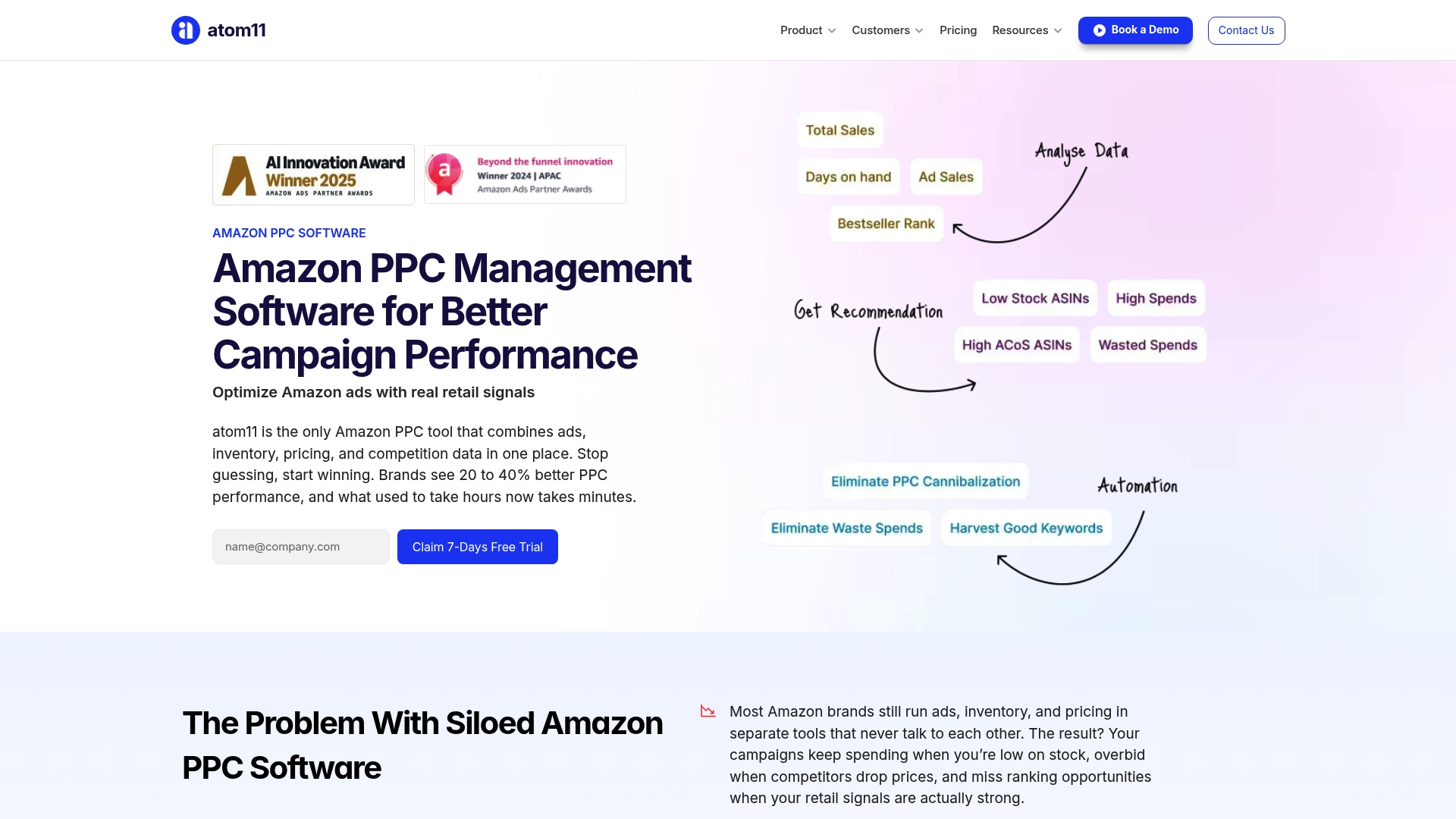
The vendor advertises a 20–40% improvement in PPC results. It combines inventory, pricing, and competitor signals directly into bid management to inform bids and automations. That retail-aware approach targets brands, agencies, and larger sellers rather than solo hobby sellers.
Core Features
atom11 centralizes campaign, inventory, pricing, and competitor data and ties those signals to bidding rules and reporting. Key capabilities include Bid Optimization, a Root Cause Analyzer that surfaces why performance changed, and AI Copilot Neo for suggestion-driven workflows. The platform also supports dayparting, keyword harvesting, search term negation, Power BI reporting, version control, and digital shelf tracking.
Key Differentiator
The product’s defining feature is integrating retail signals like inventory, price, and competition data directly into bid automation. That signal fusion gives bidding logic access to upstream retail context rather than treating ads in isolation. This focus makes atom11 better suited to sellers and brands with complex catalog and retail dynamics than to teams that only need quick campaign-level fixes.
Pros
According to the company, atom11 reduces routine management time from hours to minutes, which frees teams to act on strategy. The product is reported to have strong support, a clean, easy to learn interface, and steady product updates that add practical features. Retail-aware bidding and automated workflows let agencies and brands scale repetitive tasks while retaining control through versioning and custom reporting.
Cons
- Cost can escalate quickly as spend scales, which may price out smaller sellers.
- Missing advanced API capabilities limits deep custom integrations for engineering teams.
- Pricing tiers may be hard to justify for growing operations with uneven seasonal spend.
When It May Not Fit
If you run a single, low-volume storefront with tight margins, atom11’s pricing tiers and retail signal focus may be overkill. If your team needs full programmatic API control for custom tooling, the product’s limited API features could force a secondary platform. Smaller agencies that prioritize simple campaign edits over retail-aware automation will find the feature set mismatched.
Who It’s For
Brands and agencies managing multiple Amazon accounts and large catalogs will get the most value from atom11. Sellers that need bidding to reflect inventory and competitive price changes will benefit from its retail-aware rules. This product targets teams ready to trade manual tweaks for automated, signal-driven bid management.
Real World Use Case
According to the vendor, a mid-sized seller used atom11 to change bids based on inventory, competitor pricing, and organic rank and saw a 25% improvement in ad performance within two weeks. That example shows how retail signals can correct inefficient bids quickly. It also illustrates the minimal manual effort required after setup.
Pricing
Beginner: $499/month for ad spend up to $50K/month.
Professional: $1,199/month for $50K–$500K/month.
Enterprise pricing is custom for agencies or spend above $500K/month.
Website: https://atom11.co
AdCanyon
At a Glance
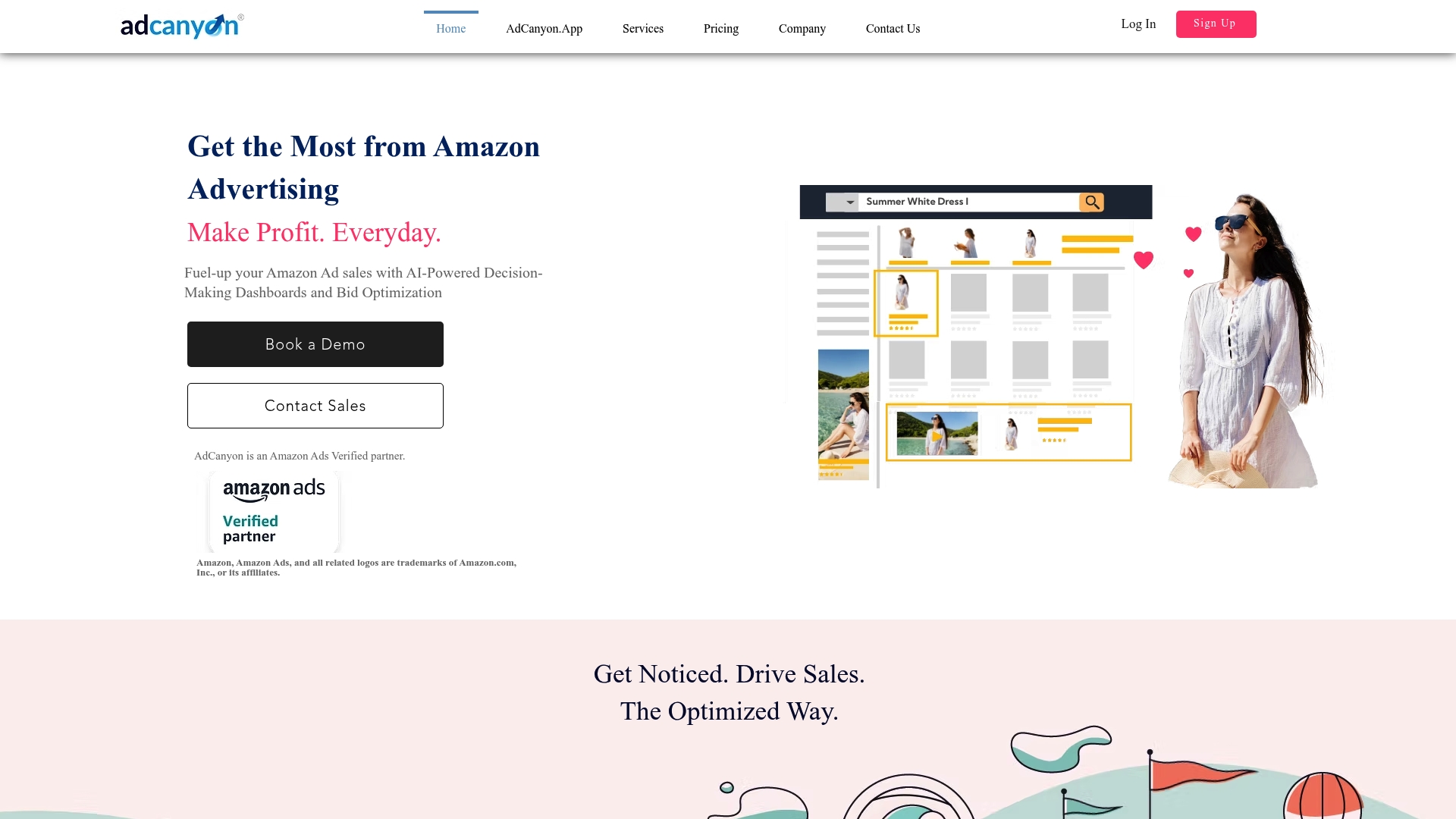
AdCanyon pairs machine learning bid automation with managed services from Amazon Ads Verified experts. The combination aims to run ASIN focused campaigns while a team handles strategy and adjustments. That setup targets sellers who want both software controls and human oversight.
Core Features
AdCanyon centralizes bid optimization, ASIN focused campaign planning, and keyword research into a single dashboard. The platform generates automated performance reports and offers a managed PPC service staffed by Amazon Ads Verified experts. You can switch between automated and manual bid adjustments while reviewing deep analytics and segmented campaign views.
Key Differentiator
The standout is the blend of automated bid adjustments and a dedicated expert management layer. That mix means sellers get algorithmic bid changes plus human review of strategy and segmentation. The vendor positions that model as a way to focus on ROI without needing full internal PPC staffing.
Pros
AdCanyon combines technology and managed PPC services, which reduces the daily workload for sellers who prefer delegating campaign adjustments. The platform emphasizes detailed segmentation by ASIN and keyword, letting you isolate underperforming listings and test targeted bids. Rich dashboards and automated reports make it easier to see which moves changed performance. Flexible controls let you pause automation and apply manual bids when you want tighter control.
Cons
- Pricing is not disclosed, so evaluating cost versus return requires direct vendor contact.
- Public third party reviews are not provided, which limits independent validation of long term results.
- Heavy reliance on automated bid logic may add complexity for sellers without PPC experience.
- The model depends on ongoing coordination between the software and the managed team, which can add process overhead.
Who It’s For
Sellers managing multiple ASINs who want to offload day to day bid work while keeping campaign oversight. Brands that lack an internal Amazon Ads specialist but want targeted campaign segmentation will find the managed service model useful. It also fits sellers who need both reports and hands on adjustments.
Real World Use Case
A seller with a catalog of complementary ASINs uses AdCanyon to set ASIN focused campaigns and let the platform adjust bids by keyword. The managed team reviews low performing keywords and recommends reallocating budget toward higher converting listings. The seller receives regular performance reports and uses them to refine product listings and launch experiments.
Pricing
The vendor does not publish pricing on its site. That means list price, tier structure, and seat or managed service fees are not publicly listed and require a sales conversation. Ask for sample contracts and a clear fee breakdown before committing.
Website: https://adcanyon.com
Amazon PPC Optimization Software Comparison
Compare leading Amazon PPC optimization platforms for common uses and features.
| Product Name | Key Differentiator | Best For | Pricing | Notable Limitation |
|---|---|---|---|---|
| Selloop | AI-driven recommendations with day 8 and day 15 verdicts | Solo sellers, agencies | Fixed fee plans | Requires Amazon Ads account connection |
| atom11 | Retail signal-driven bid automation | Brands, agencies | $499/month and up | High cost may deter small sellers |
| AdCanyon | Managed PPC services with automated dashboards | Sellers needing expert support | Price not published | Heavy reliance on automated processes for PPC beginners |
How Can Amazon Sellers Improve Campaign Results Beyond Traditional Zon Tools Review?
Sellers managing multiple Amazon accounts often struggle to track the real impact of their bid and keyword changes. Traditional zon tools review highlights this common challenge: making campaign adjustments without clear data on long-term effects. Selloop solves this problem by evaluating results with verdicts on day 8 and day 15. It offers detailed explanations for every recommendation, helping sellers reduce wasted ad spend and gain clarity on performance faster.
Whether you are a solo Amazon seller or part of a larger brand or agency team, Selloop’s fixed fee with no commissions on ad spend makes smarter bidding affordable and predictable. Visit Selloop.ai now to see how explained recommendations and day 8 and day 15 verdicts turn manual campaign review into clearer decisions.
FAQ
What features make Selloop a good choice for Amazon PPC optimization?
Selloop measures the impact of the campaign changes you apply with verdicts from day 8 and day 15. It connects directly to the Amazon Ads API to pull campaign data without manual exports, reducing time spent on manual follow-up. Users can expect streamlined tracking and actionable insights with minimal effort.
How does Selloop compare to AdCanyon for managing campaigns?
AdCanyon combines machine learning bid automation with managed services from Amazon Ads Verified experts, allowing for expert oversight alongside algorithmic control. For those who prefer a software-only approach, Selloop proposes changes that you review and apply yourself, without the need for managed services, making it ideal for solo sellers or those wanting to avoid the higher costs involved in comprehensive management.
Which platform helps more with keyword harvesting?
Selloop proposes keywords to harvest: it surfaces profitable search terms from your own ad reports, and you add each one with one click.
Can I use Selloop if I have privacy concerns about connecting to Amazon Ads?
While Selloop requires a connection to Amazon Ads for optimal performance, many teams find the productivity gains worth it. This platform is designed with efficient tracking and reporting in mind, potentially mitigating privacy concerns through controlled access.
What pricing options does Selloop provide for different user needs?
Selloop offers several fixed-fee plans with no commissions on ad spend. This pricing structure intends to accommodate solo sellers as well as larger brands seeking affordable options for optimized Amazon PPC management, making it accessible for different user sizes.