Top 5 Amazon PPC Optimization Software Alternatives 2026
Managing multiple Amazon PPC campaigns without wasting ad spend or losing track of performance changes is harder than necessary. Most tools force users to accept limited manual oversight, demand expensive minimums, or hide pricing and integrations. This comparison lets Amazon sellers, agencies, and brands decide which software matches their need for control, automation, and pricing transparency.
Table of Contents
Selloop.ai
At a Glance
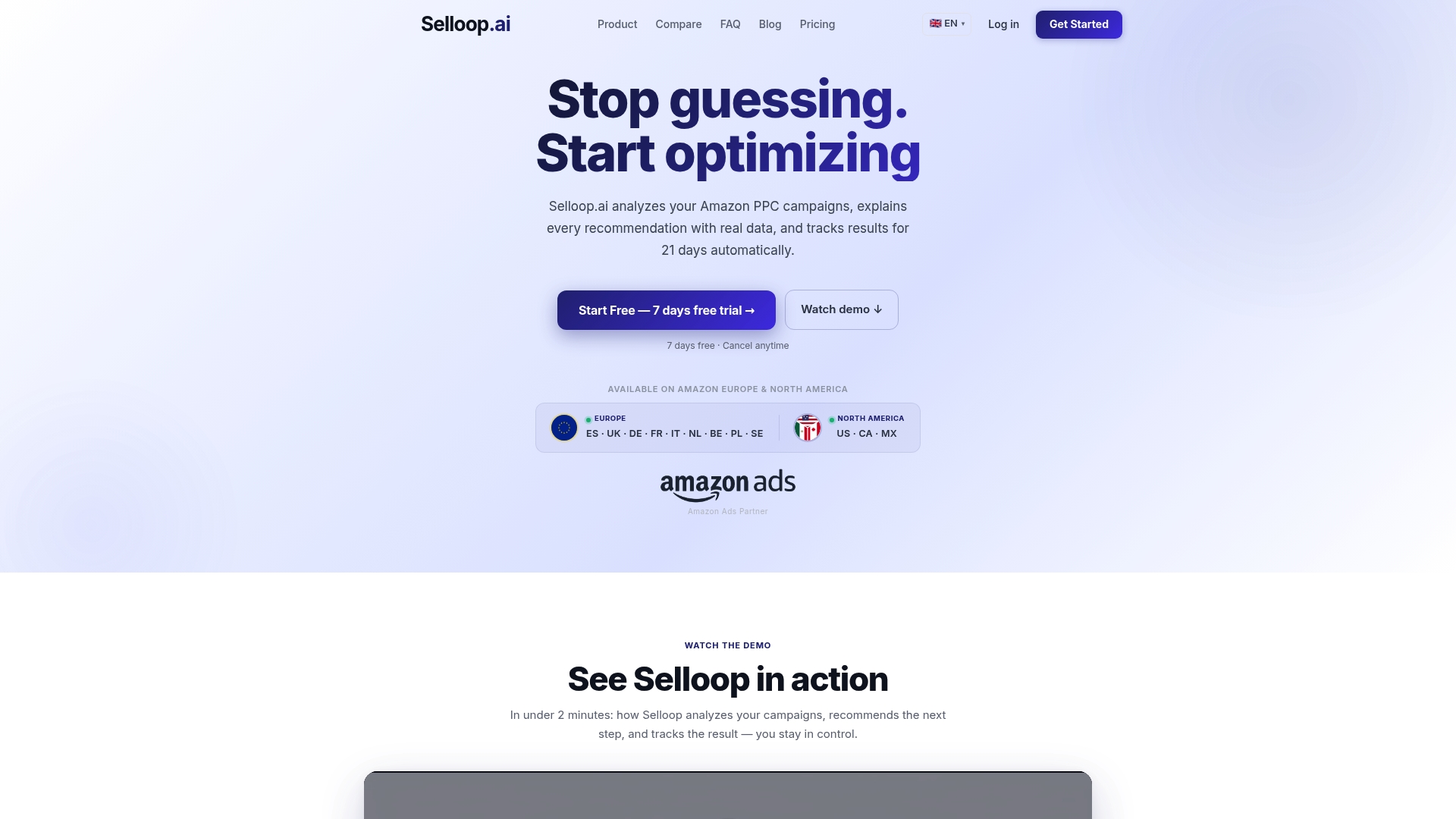
Selloop.ai’s marketing materials state it measures campaign changes and reports results over 21 days. The tool scans multiple Amazon campaigns to flag ads with high spend and low performance and pulls profitable keywords from auto campaigns. Its dashboard shows health scores and alerts so you can prioritize issues quickly.
Core Features
Selloop.ai runs deep analysis across Amazon PPC campaigns and generates recommendations that include the data behind each decision. The platform offers AI profiles tuned to conservative, balanced, or aggressive strategies and harvests keywords from auto campaigns to feed manual or manual-style campaigns. It also tracks the effect of each change over a 21-day window and displays campaign health scores and alerts in a single dashboard.
Key Differentiator
Provides detailed, explainable AI-driven recommendations combined with automatic campaign tracking over 21 days. That 21-day tracking claim lets you compare prechange and postchange performance without building spreadsheets. The explainable recommendations include the specific metrics that drove a suggestion so you can audit why a bid or keyword change was proposed.
Pros
Selloop.ai gives clear, data-backed recommendations and shows why each suggestion makes sense. The interface groups high spend and low performance signals so you can find waste quickly, and the keyword harvesting feature moves profitable search terms from auto to manual where you can control bids. The vendor states the tool tracks change impact over 21 days, which removes guesswork about short term noise. Built in health scores and smart alerts reduce time spent on manual triage and make daily campaign checks faster.
Cons
- Requires connection to your Amazon Ads account for full functionality. This dependency means you cannot evaluate the full feature set without granting account access.
Who It’s For
Solo Amazon sellers, small brands, and PPC managers who want stronger evidence for each campaign decision will find this useful. Agencies managing multiple clients can use the platform to standardize reporting and to run different AI profiles across accounts. Teams that prefer seeing change outcomes over a fixed time window will get the most from the tracking claim.
Unique Value Proposition
The platform’s emphasis on the 21-day tracking window changes how you test PPC changes. Instead of judging a bid tweak after a few noisy days, you can wait through that 21-day window and see whether conversions, cost per sale, or ACOS moved as expected. That approach reduces frequent guesswork and supports more disciplined bidding and keyword moves across campaigns.
Real World Use Case
An Amazon seller connects an account, runs an AI profile set to balanced, and applies recommended bid adjustments on underperforming keywords. The system harvests three profitable terms from an auto campaign and suggests pausing two high spend keywords. The seller tracks performance through the 21-day window, reviews the health score changes, and reallocates budget away from underperforming placements.
Pricing
Pricing starts at €29/month and scales to €249/month for larger volumes and features. The vendor also offers custom enterprise plans for high spend or multiaccount management.
Website: https://selloop.ai
atom11
At a Glance
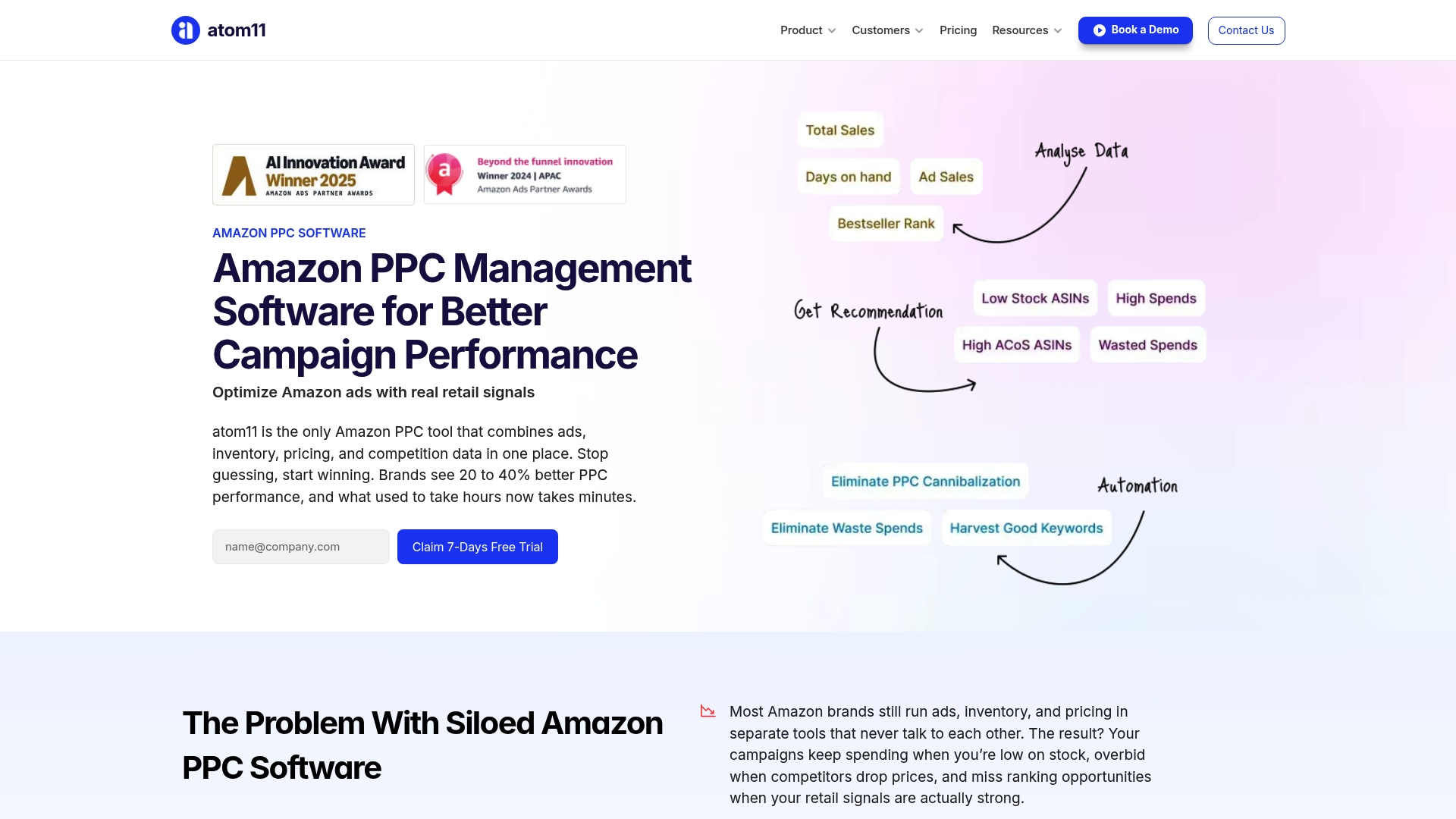
Starting price is $499/month for up to $50K ad spend. The vendor advertises retail aware automation that pulls inventory, pricing, and competition signals in real time. That focus gives extra context to bids and keyword decisions, which appeals to teams running large, complex ad portfolios.
Core Features
atom11 combines Bid Optimization, a Root Cause Analyzer, and dayparting with keyword harvesting and search term negation. The platform pairs version control and custom reporting with digital shelf tracking, so you can tie ad performance back to catalog and pricing changes. An AI copilot labeled Neo assists with suggestions and performance insights.
Key Differentiator
According to the company, atom11 stands out for retail aware automation that links inventory and pricing to ad rules. That integration helps bids react when inventory or price shifts affect conversion probability. For sellers who need bid changes to respect inventory health and competitor pricing, this creates a single source of truth for automated actions.
Pros
atom11 automates repetitive campaign tasks so you spend less time on manual bid edits and harvesting search terms. It provides detailed visibility across large catalogs and surfaces reasons behind performance swings with the root cause tool. The platform gives granular controls favored by high spend accounts, and reporting ties ad moves back to inventory and pricing changes so decisions have data you can follow up on.
Cons
- Steeper learning curve for new users. Training and initial setup take time before you see returns.
- Feels complex for simpler needs. Single ASIN or low spend accounts will not need every control it exposes.
- More suited for high volume or complex accounts than casual sellers. Smaller sellers may find the cost structure heavy.
When It May Not Fit
If you run a handful of low spend SKUs, atom11 will likely be overqualified for your workflow. Teams that want plug and play simplicity with minimal setup will not enjoy the depth here. Agencies or brands with frequent catalog churn should evaluate onboarding effort against the expected management savings.
Who It’s For
High volume Amazon sellers, brand managers, and agencies managing many client accounts will get the most from atom11. The platform matches teams that need retail signals tied to bidding and those that run complex catalogs with variable pricing. If your priority is tight control and automation for large ad budgets, this fits the bill.
Real World Use Case
A high spend seller used atom11 to automate bidding, keyword harvesting, and dayparting across a catalog of hundreds of SKUs. The team routed inventory alerts into bid rules so low stock items reduced bids automatically. That trimmed wasted spend and freed analysts to focus on listing issues and pricing tests instead of manual bid edits.
Pricing
Pricing starts at $499/month for up to $50K ad spend. The vendor lists higher tiers for larger ad budgets and agency needs. Specific tier limits and agency plans are available directly from atom11.
Website: https://atom11.co
AdCanyon
At a Glance
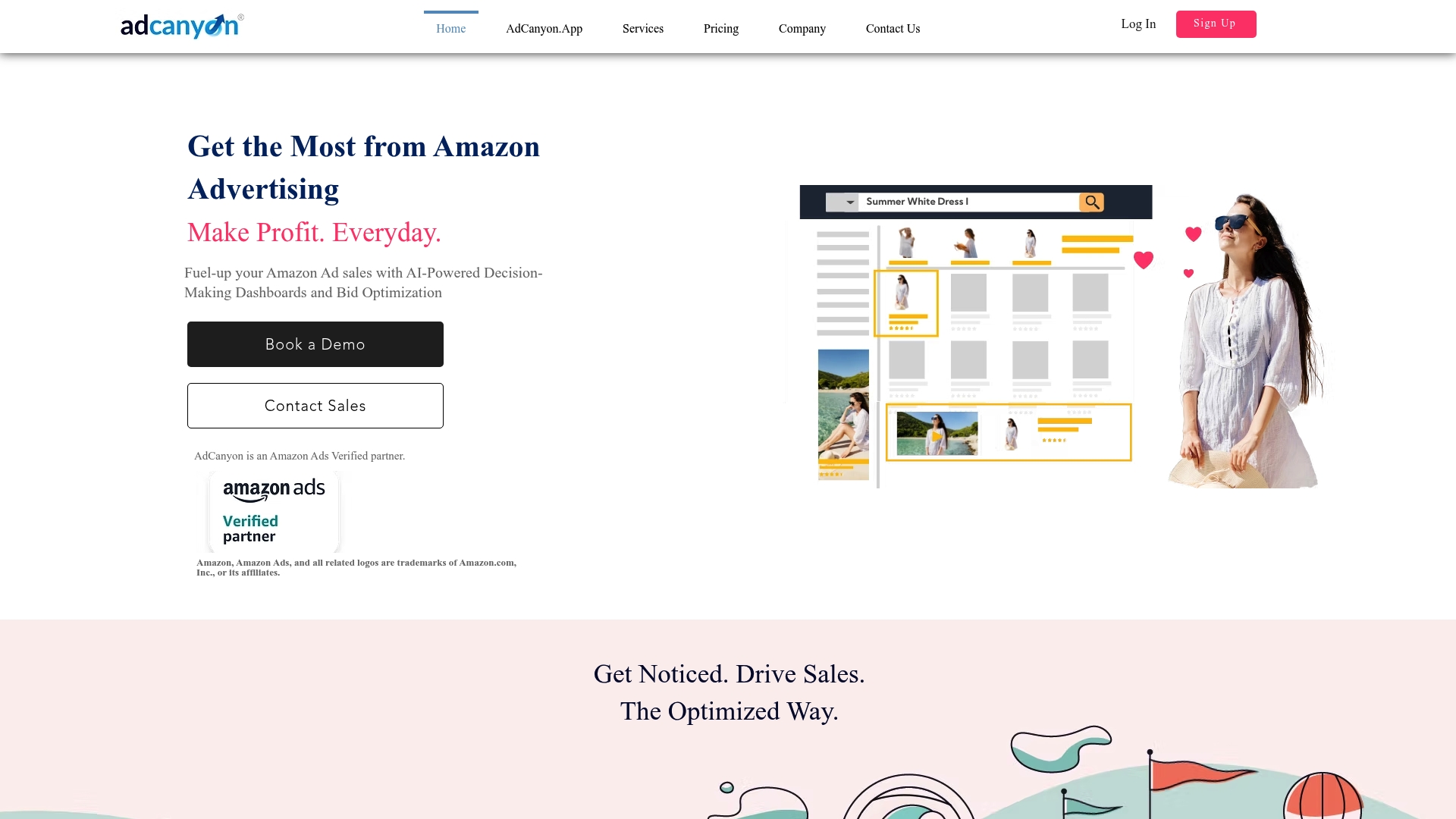
AI powered bid optimization works alongside dedicated PPC specialists to target bids at the ASIN level and by keyword. AdCanyon combines automation with manual controls so sellers can segment high converting keywords and monitor results. The platform also surfaces deep campaign metrics through its analytics dashboards.
Core Features
The platform centralizes AI driven bid optimization, expert led keyword research, and both automated and manual bid controls into a single workflow. It supports ASIN specific campaign structures and lets you split campaigns for high conversion keywords while tracking ASIN metrics in the dashboard. Educational resources and expert support sit alongside the analytics to help sellers act on performance signals.
Key Differentiator
What sets this apart is the mix of AI driven bidding with human PPC management and detailed analytics targeted at ASIN level performance. That combination aims to tune bids automatically while giving experts control for strategic adjustments. The result is a tighter focus on profitable keywords and clearer justification for bid changes.
Pros
AdCanyon pairs machine driven bid decisions with human oversight, which reduces repetitive work while preserving manual control when needed. Campaign segmentation by ASIN and keyword helps isolate high converting terms and measure their direct ROI. The analytics dashboards provide granular campaign and ASIN metrics so you can compare changes and validate strategy shifts.
Cons
-
Setup and initial campaign structuring may feel complex for beginner sellers. This can require a learning curve before you see benefits.
-
The vendor does not publish pricing publicly. Lack of transparent pricing can complicate budgeting for small sellers.
-
Integrations beyond Amazon Ads and common analytics tools are not documented, which may limit broader martech connections.
-
Heavy reliance on AI driven decisions may still require ongoing manual oversight to avoid unwanted bid moves.
When It May Not Fit
If you are a new seller with limited campaign experience, the platform may demand more upfront configuration than you want. Teams that need a plug and play solution with public pricing could find this approach frustrating. If your stack requires many third party integrations outside Amazon Ads, integration gaps may make this a poor match.
Who It’s For
Amazon sellers and brands that already run multichannel campaigns and that can commit analyst time to campaign setup will get the most value. It suits sellers who want AI to handle routine bid work but still want experts to guide strategy. Mid sized brands with multiple ASINs and substantial ad spend will benefit most.
Real World Use Case
A seller with dozens of ASINs used AdCanyon to split campaigns by top converting keywords and apply AI driven bids across those segments. Expert review adjusted bids for seasonal shifts while the dashboard tracked ASIN performance. The seller cut wasted spend on poor keywords and focused budget on the highest returning terms.
Pricing
The vendor does not list pricing publicly. That means you will need to contact the vendor for tier details and setup costs before committing. Budget conscious sellers should request a full pricing breakdown and any minimums.
Website: https://adcanyon.com
DataFuel
At a Glance
DataFuel reports a D2C customer cutting 20 hours of weekly campaign work and improving ROAS by 25% after adopting its automation. That vendor-reported outcome highlights the platform’s focus on reducing manual tasks for marketplace advertisers. The entry price starts at $449/month for the Starter plan.
Core Features
DataFuel centralizes campaign metrics in a unified dashboard that shows real-time performance across marketplaces. It includes advanced automation rules for bid management, a campaign launcher for bulk creation, and dayparting to shift spend by time of day. The platform currently integrates deeply with Amazon and lists Walmart and Flipkart as upcoming integrations.
Key Differentiator
The product’s single strongest point is its cross-marketplace view. Teams can manage Amazon campaigns alongside other marketplaces from one interface. That setup reduces the need to jump between vendor consoles and spreadsheets. The marketplace integrations aim to let agencies scale similar campaign structures quickly. This focus suits sellers who run ads on more than one marketplace.
Pros
DataFuel pulls multiple marketplace feeds into one reporting view, which saves time when you must compare performance across channels. Its automation rules and dayparting reduce routine manual bidding and campaign scheduling. Real-time analytics let you spot inventory or performance gaps faster than waiting for daily exports. Agencies benefit from bulk campaign creation when onboarding multiple sku lines and clients.
Cons
- Pricing may feel steep for small brands. The Starter plan begins at $449/month and enterprise pricing is custom.
- Feature set centers on marketplace ads. Full cross-platform parity relies on upcoming integrations.
- New users report a learning curve. The interface can feel dense without onboarding support.
When It May Not Fit
If you run only a single Amazon storefront with low monthly ad spend, DataFuel’s $449 starting price could be hard to justify. Smaller teams without onboarding resources may struggle to set up custom automation rules. If you need instant support for marketplaces beyond Amazon today, this platform may not match your timing.
Notable Integrations
DataFuel connects to the Amazon Advertising API and lists planned support for Walmart and Flipkart. Those upcoming links aim to extend cross-marketplace campaign parity once enabled.
Who It’s For
Direct-to-consumer brands and agencies managing multiple marketplace ad accounts will see the most value. Teams that spend time reconciling daily reports or building campaigns manually benefit from the bulk campaign tools. Brands planning to expand beyond one marketplace will find the cross-platform focus especially relevant.
Real World Use Case
A D2C brand migrated its Amazon and Flipkart campaigns into DataFuel to reduce repetitive bidding tasks. The vendor reports that the brand cut weekly manual hours and improved ROAS. That result freed two team members to prioritize catalog expansion and creative testing instead of routine bid adjustments.
Pricing
DataFuel lists a Starter plan starting at $449/month. Larger sellers and agencies move to custom-priced tiers that unlock full automation and multi-marketplace features. Trial and onboarding details are not publicly listed.
Website: https://datafuel.tech
adlabs.app
At a Glance
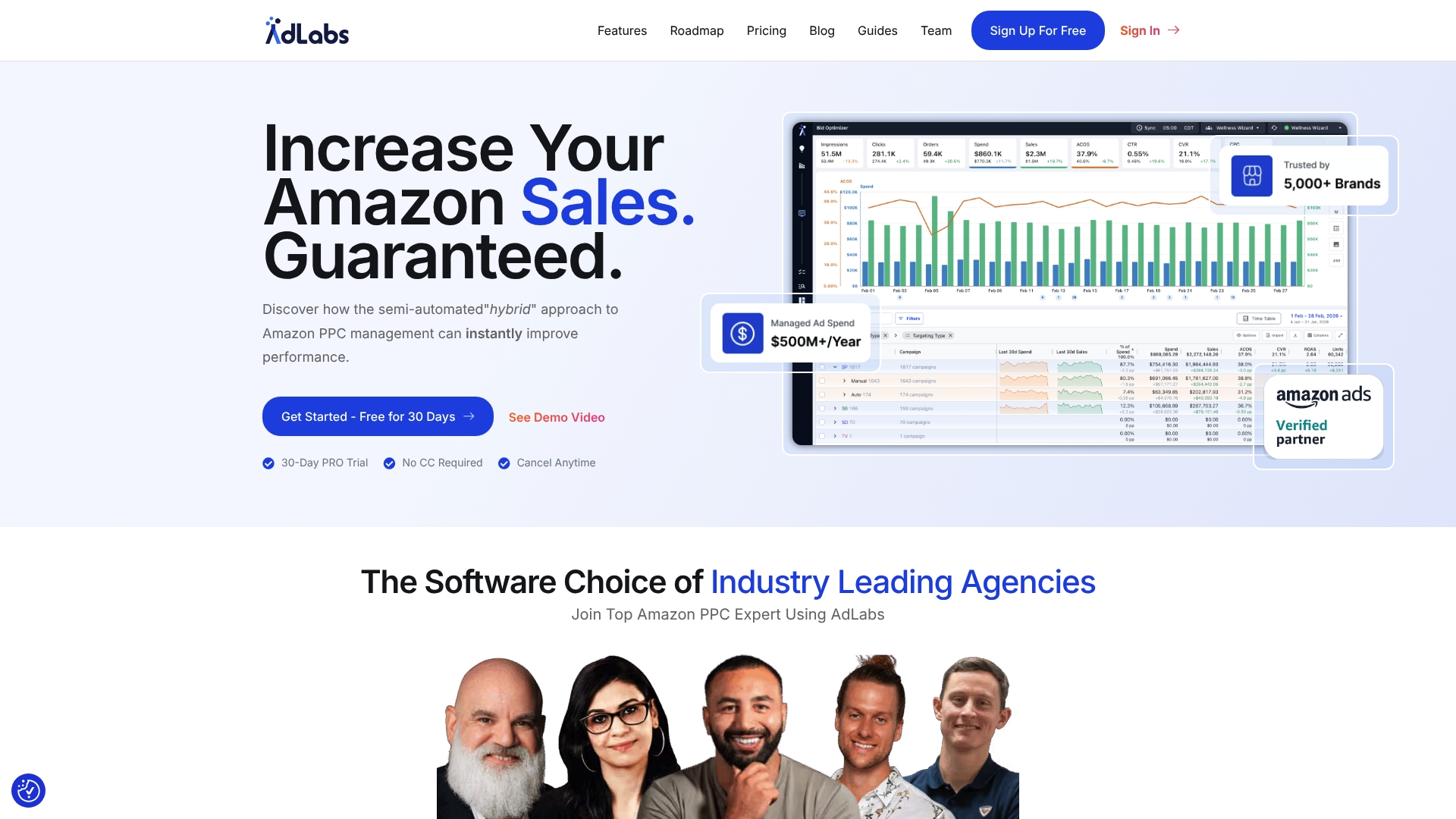
AdLabs reports it pays for itself within 2 weeks. The platform pairs manual control with automation to give managers precise bid adjustments. Plans include a free tier for small brands and enterprise options for large spenders.
Core Features
AdLabs runs semi-automatic bid optimization while keeping hands-on controls for managers. It harvests keywords and manages negative lists, and it offers custom dashboards plus market share tracking. Pro-level functionality adds automations, dayparting, and DSP access.
Key Differentiator
The product’s single defining feature is a hybrid workflow that blends automation with manual oversight. That approach keeps you from surrendering campaign control while reducing routine work. It suits teams that need guardrails rather than full automation.
Pros
The hybrid model gives campaign managers the ability to tune bids and still let automated rules handle routine adjustments. The vendor advertises measurable performance gains and faster profitability. Custom dashboards and detailed analytics make reporting easier for agencies and brands. Support from Amazon PPC managers helps during onboarding and complex migrations.
Cons
- Free plan is limited to Sponsored Products and includes fewer data retention capabilities, which constrains historical analysis.
- Pro plan charges ad spend percentage plus a monthly fee, which may raise costs for smaller sellers.
- Advanced items such as DSP access and dayparting are listed as beta or closed beta and may be unstable or restricted.
When It May Not Fit
If you need long historical retention on a free tier, this product will feel constrained. If you require guaranteed stability for DSP or dayparting today, beta availability may cause interruptions. High-cost sensitivity for very small sellers makes the Pro plan a poor match.
Notable Integrations
AdLabs integrates with Amazon Seller Central and Amazon Vendor Central. Those connections allow direct sync of campaign data and bidding signals from your Amazon accounts.
Who It’s For
This tool suits Amazon sellers and agencies that manage multiple accounts and want controlled automation. Use it if you value manual oversight plus automated rule execution. Avoid it if you need every advanced feature at the lowest monthly cost.
Real World Use Case
The vendor reports an agency using AdLabs reduced wasted ad spend by 20% and increased sales by 15% within the first month. That example shows the platform working across multiple accounts to harvest keywords and tune bids.
Pricing
A free tier is available for small brands and freelancers. The Core plan charges 1% of ad spend plus $40/month. The Pro plan charges 2% of ad spend plus $40/month. Enterprise accounts use flat-rate pricing for high spend accounts.
Website: https://adlabs.app
Comparison of alternatives
Balancing simplicity and automated tracking, Amazon PPC optimization tools present distinct options for sellers and agencies with varying complexity needs. While every solution reviewed offers strengths suited to specialized workflows, the contrast reveals meaningful tradeoffs which clarify the broad utility range of these tools.
Explainability and Tracking
Selloop.ai emphasizes explainable recommendations paired with a fixed tracking window. Its output explains the rationale of changes, supported by a 21-day result-checking approach which aids in assessing long-term impacts. Conversely, other platforms such as AdCanyon focus on granular analytics alongside expert human oversight, adding depth in scenarios demanding manual evaluation.
Advanced Automation
For sellers requiring intricate automation responding to real-world retail dynamics, atom11’s integration considering inventory and price changes emerges as a clear advantage. The ability to match bids to stock health and competitor price movements enables highly tuned advertising strategies for larger, more dynamic accounts. Teams needing cross-platform support might lean toward DataFuel, enabling campaign launches across multiple marketplaces, centralizing management.
Best fit
- Sellers seeking detailed AI-driven guidance over campaign adjustments and effects should prioritize Selloop.ai for its clarity and tracking.
- Brands managing inventory-related ad setups should consider atom11 due to its automated adjustments optimally linked to stock changes.
- Multi-market operators balancing campaigns across channels will benefit significantly from DataFuel’s unified dashboards and cross-platform potential.
- Teams prioritizing manual control coupled with automation should explore AdLabs for its hybrid workflows and budget-conscious access.
Our pick
Selloop.ai offers an exceptional combination of explainable recommendations and extended tracking mechanisms, enabling disciplined campaign testing and adjustments. However, if workflows demand advanced inventory integration or multi-market flexibility, exploring alternatives geared toward such complexities may provide better alignment.
To compare available Amazon PPC optimization software options, here is a summary of their key features, pricing, and limitations.
| Software | Key Features | Best For | Pricing | Limitations |
|---|---|---|---|---|
| Selloop | AI-driven recommendations, 21-day tracking | Solo sellers, small brands | €29–€249/month | Requires Amazon Ads account connection |
| atom11 | Retail-aware automation, root cause tools | High-volume sellers | $499/month | Steep learning curve for new users |
| AdCanyon | AI + expert PPC management, detailed analytics | Sellers managing ASIN campaigns | Price not published | Complex setup for beginners |
| DataFuel | Cross-marketplace view, multi-Market integration | Agencies, D2C brands | $449/month | Upcoming integrations pending |
| AdLabs | Semi-automatic bidding, hybrid workflow | Agencies, multi-account management | Free–2% of spend + $40/month | Limited features in the free tier |
How Can You Reduce Amazon PPC Wasted Spend and See Real Results?
Amazon sellers and PPC managers often struggle to identify which campaign changes truly improve performance. You want clear evidence showing which bids or keywords to adjust without sifting through spreadsheets or short-term noise. Selloop meets this challenge by providing AI-driven recommendations with transparent data backing each suggestion. Its unique 21-day tracking window lets you measure the actual impact of your campaign changes confidently.
Key benefits include:
- Pinpointing low-performing, high-spend ads fast
- Harvesting profitable keywords from auto campaigns
- Delivering campaign health scores and alerts in one dashboard
If you manage Amazon campaigns and need solid proof of what works, visit Selloop.ai to see how you can better control your ad spend and boost profitability with fewer hours spent on analysis.
FAQ
What specific capabilities make Selloop ideal for Amazon PPC optimization?
Selloop effectively measures campaign changes and reports results over 21 days, allowing users to track the impact of adjustments. Its advanced dashboard displays health scores and alerts, helping users prioritize issues quickly. Start by connecting your Amazon Ads account to leverage these insights.
How does Selloop compare to atom11 in terms of automation?
atom11 excels in retail aware automation by integrating inventory, pricing, and competition signals in real-time. This feature offers additional context for bidding decisions, which is beneficial for teams managing complex portfolios. In contrast, Selloop focuses on deep analysis and bidding strategies through its explainable AI-driven recommendations, making it a better fit for users seeking clarity on adjustments.
Can Selloop users expect clear recommendations based on data?
Yes, Selloop generates data-backed recommendations that include the specific metrics driving each suggestion. This transparency allows users to audit why bid or keyword changes were proposed, enhancing decision-making. Utilize these insights to optimize your PPC campaigns effectively.
What is the pricing structure for Selloop, and how does it scale?
Selloop pricing starts at €29/month and scales up to €249/month for larger volumes and features. This tiered model enables you to choose a plan that best fits your budget and campaign needs. Consider starting with the lower tier to test the platform’s suitability for your advertising strategy.
How does Selloop support keyword harvesting from auto campaigns?
Selloop efficiently harvests profitable keywords from auto campaigns to enhance manual or manual-style campaigns. This feature allows users to transfer successful search terms, improving overall campaign performance. Leverage this capability to enhance your keyword strategy seamlessly.